.png)
Canada, Europe and the Fracturing of the Western Order
Written by Fin Bird
Edited by Saneya Mohamed and Francesca Howard
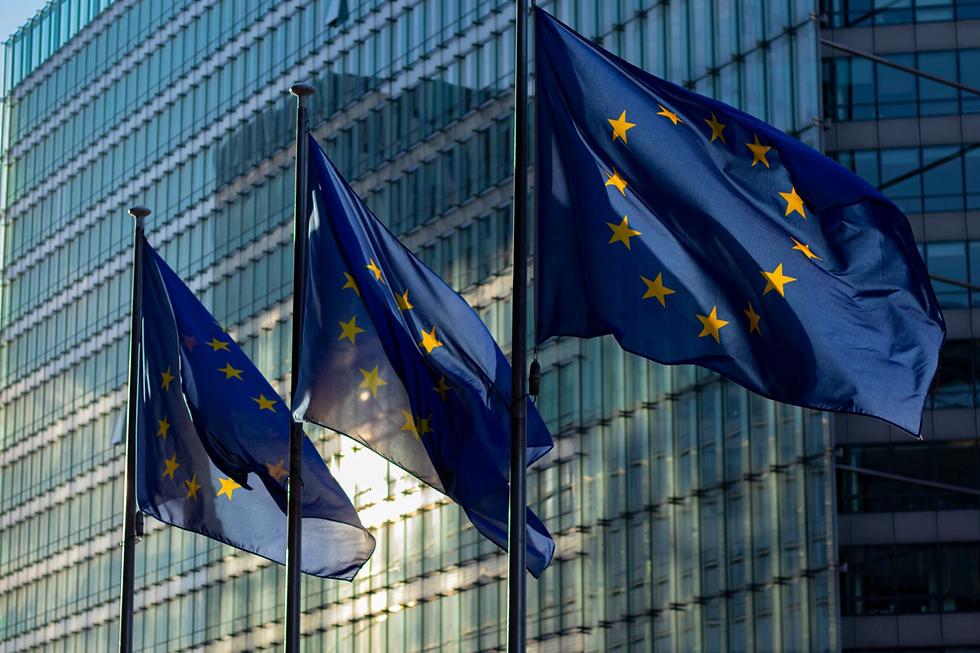
A new rift is opening in transatlantic geopolitics. During her State of the Union speech in Strasbourg, European Commission President Ursula von der Leyen took the unprecedented step of inviting Canada to become the European Union’s first-ever ‘associate member’. The move, designed to forge an ‘alliance for the future’ around shared defense industrial bases – critical raw materials and artificial intelligence –represents the most radical attempt to rewire Western alliances in response to rising protectionism.
Predictably, the proposal quickly drew fury from across the Atlantic. Within hours of the announcement, President Trump derided the prospect as “laughable” and warned of severe retaliatory measures if the move is deemed hostile: “If it’s a bad intention, we’ll put very heavy tariffs on Europe.”
For Ottawa, the move represents a dramatic strategic shift under Prime Minister Mark Carney. With trade disputes flaring and rhetoric from Washington increasingly challenging its sovereignty, Canada finds itself in a precarious spot: it still sends more than 70% of its exports to a neighbor that has shown little hesitation in using trade as a weapon. In response, Carney has broken away from standard bilateral talks and pivoted towards forging a coalition of like-minded ‘middle powers.’
This friction is textbook realism. As John Mearsheimer’s Great Power theory posits, the international system is defined by structural anarchy. The great powers are thus compelled to maximize their relative power and fiercely guard regional hegemony, driven by uncertainty over rivals’ future intentions. From Washington’s perspective, any attempt by an integrated external bloc – even one comprised of traditional democratic allies – to court its northern neighbour is not routine diplomacy, but a revisionist intrusion into its strategic backyard.
Yet from Ottawa’s perspective, the same realist logic dictates survival: facing the acute vulnerabilities of an asymmetric neighbor prone to unilateral coercion and weaponized trade, Canada is engaging in counter-balancing, by anchoring itself to Europe’s regulatory and economic weight. This represents not an attempt to mount an offensive challenge against the hegemon, but rather seeking the institutional scale necessary to shield its domestic sovereignty in an increasingly polarized world.
Prime Minister Carney sought to diffuse such tensions in his Strasbourg speech on Thursday. Insisting that Canada is pursuing neither full EU membership nor the mantle of a global disruptor, he drew a stark line between great-power dominance and democratic defence:
“I am not proposing a third bloc in order to become a great-power rival, only with better manners…We do not seek power to dominate others. On the contrary, we are pursuing resilience so that no one can control our open markets, impair our sovereignty, threaten our territorial integrity, or undermine our freedoms, our democracies, our rule of law.”
By framing the initiative around collective resilience, Carney is attempting to reassure global markets that middle powers are merely building a storm shelter against coercive diplomacy, not constructing a new offensive alliance themselves.
And yet, the transatlantic blowback is only half the battle, as the proposal has also been met with skepticism from within the EU itself too.
Crucially, ‘associate membership’ simply doesn’t exist in current EU law. Creating a bespoke legal category would demand unanimous approval from all 27 states – a considerably high bar in a bloc where ten member states have still failed to fully ratify the basic Canada-EU trade agreement (CETA) after nearly a decade.
The pushback is particularly acute in Berlin. German Chancellor Friedrich Merz had previously floated an associate membership model as a stepping stone for Ukraine. Extending an ad-hoc, expedited offer to a wealthy North American country complicates that delicate process, and raises sharp questions among European leaders about institutional dilution, regional priorities and the integrity of the single market.
As leaders prepare to hammer out the details, the stakes extend far beyond trade tariffs. If Ottawa and Brussels can turn Carney’s metaphor, that "a single tree will come down in a storm, but a forest will not", into a working economic reality, they may well establish a new blueprint for democratic resilience in the twenty-first century. However, if the initiative stumbles over internal European vetoes or crumbles under retaliatory pressure from Washington, the underlying dilemma will only sharpen: In an era dominated by superpower unilateralism, can middle powers truly band together to defend their sovereignty, or will the realities of great power rivalries ultimately pull them apart?
Sources:


